Every sales team is running a system. Not the one in the annual kickoff deck. The one that actually shows up on live calls, in stalled deals, and in the forecast call.
And that system is producing the exact results it was built to produce. Of course, heroics happen. A rep pulls a deal across the line in the final hours of the quarter, or an executive jumps in to save a flagship account. Those wins feel great—until the next week, when the baseline snaps right back. Heroics don't repeat. If you want different results, you have to change the system.
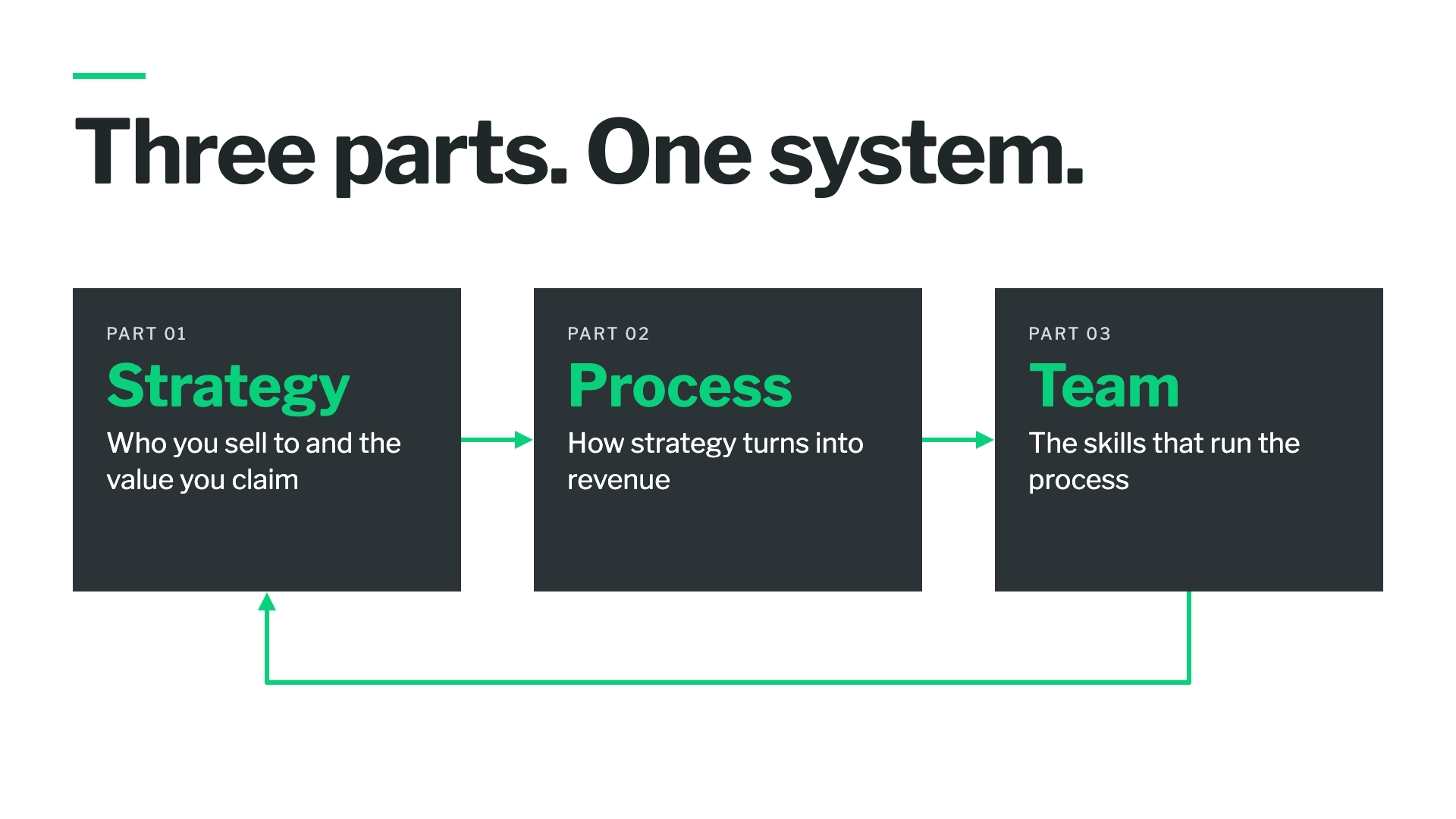
The Three Parts of a Sales System
In my experience, it's helpful to define the system as three things:
1. Strategy: Who you sell to, specific problems you solve, your differentiation, and the value you claim in the market.
2. Process: How you turn that strategy into revenue—call by call, stage by stage, through confirmed buyer commitments rather than hopeful stage names.
3. Team: The people, and the skills and behaviors they deploy to execute the process and persuade buyers to think differently.
These three pieces are not separate initiatives. They are one machine, and they have to be aligned.
Where It Breaks
In reality, the three pieces are rarely aligned. Across sales organizations, I see the same three breaks over and over:
1. The process doesn't implement the strategy. The board deck says one thing. The sales process stages, the playbook, and the weekly deal reviews reward something else entirely. And if leaders make a strategic change that never gets wired into the day-to-day - qualification, buyers, differentiation, and value - the old habits win every time. One client set a hard price floor, and months later, 42% of proposals were still below it
2. The team can't run the process. On paper, the process looks clean. In practice, the playbook assumes skills your sellers don't have yet—and frontline managers aren't coaching the gap. You can't mandate execution that your team hasn't been trained and coached to deliver. Discovery is a common gap. Every seller asks questions, but not the ones that unlock value or urgency.
3. The strategy doesn't reflect what buyers are asking for. Your buyers tell you every single week what they actually care about and what they need solved. Too often, that signal dies in call recordings and rep notes instead of sharpening positioning and messaging.
Building Momentum
When all three reinforce each other, you get a flywheel. Strategy shapes the process. The process develops the team. The team brings back unfiltered intelligence from live buyer conversations, and that sharpens the strategy. Every turn adds speed.
Aligning strategy, process, and team has been my work for 30 years. It's also what this newsletter is about. Each week, we'll focus on three things:
See it: How to measure how well your strategy, process, and team are aligned in the field.
Fix it: How to diagnose where the system is breaking—and the practical plays that close the gaps.
Accelerate it: Where AI can be deployed across the team, inside the process, and underpinning the strategy to speed up results, without automating bad habits.
Because the system always wins. Make sure you're deploying and reinforcing the one you designed.