
Every seller knows to lock in the next step before the call ends. Sales 101. So how often does it actually happen? And does it matter as much as we say it does?
I've been running recorded sales calls through deep analysis: every call, across every deal. Some findings confirm the standard "rules of selling." Others are less obvious. Here's what 1,714 calls say about next steps.
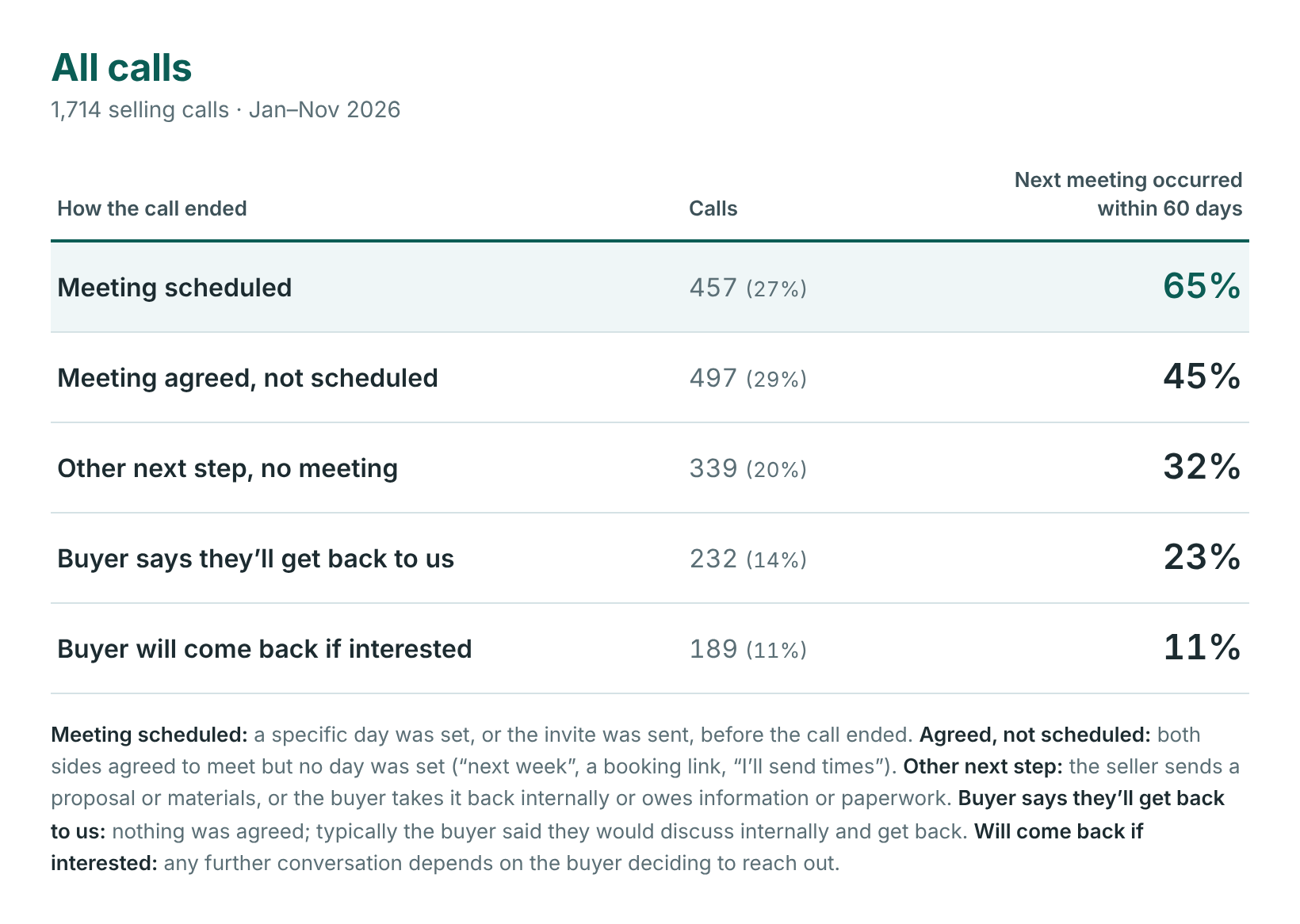
Clearly it does. Put the next meeting on the calendar and 65% meet again. Leave it at "we'll get back to you" and it's 23%. Somewhat obvious. But two things stood out:
A booked meeting is not a guarantee: even with the next meeting scheduled live on the call, 35% dropped off.
A commitment without a date is not a firm commitment: when both sides agreed to meet but set no day, 45% met again, against 65% with the day set. Sometimes it's logistics. More often it's time: the AE didn't leave enough of it at the end of the call.
Go one level deeper and the question changes. Not just whether there's a next step, but what it is.
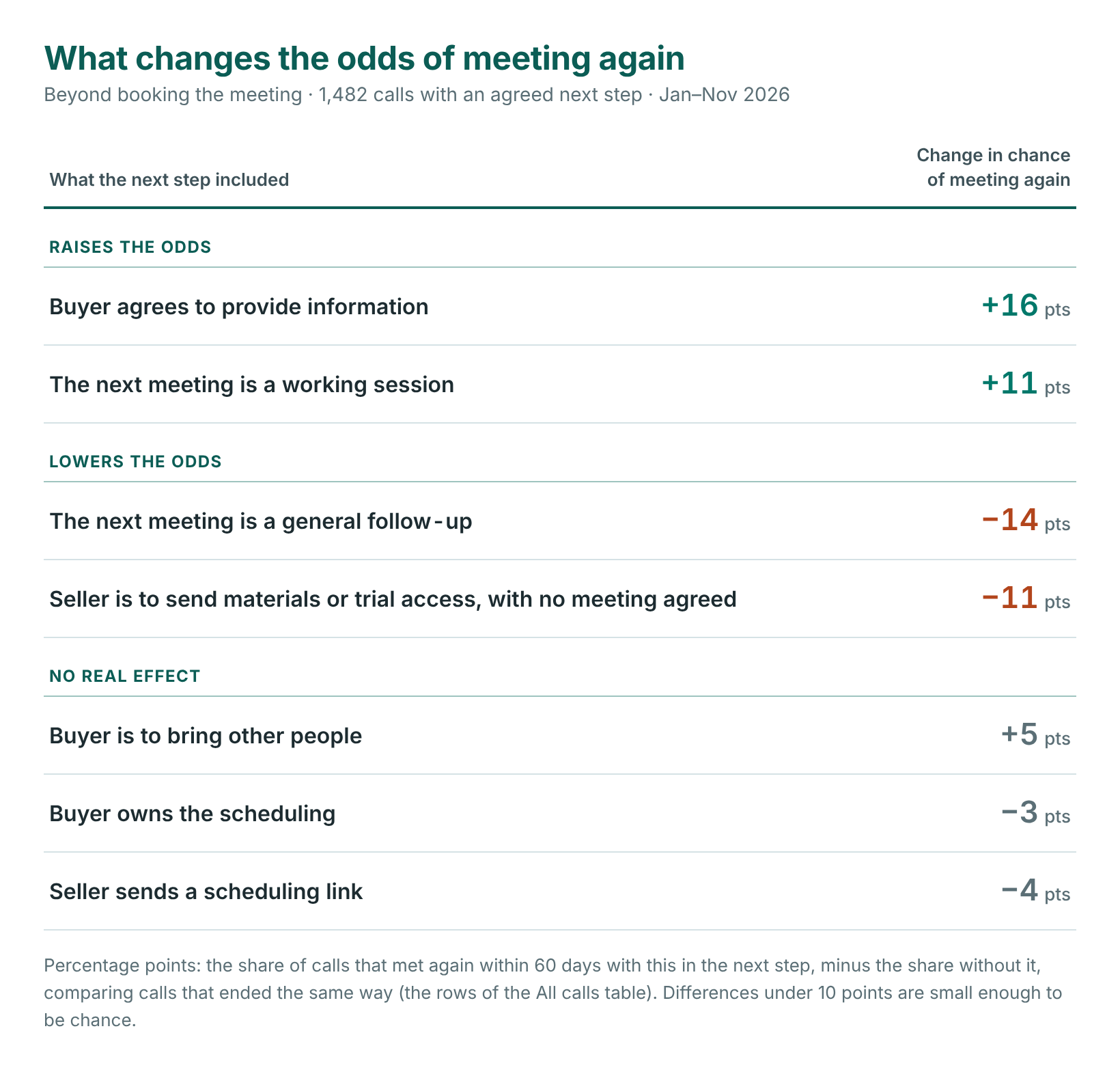
When the buyer agrees to provide information, the odds of meeting again rise 16 points. When the next meeting is a working session, 11. Bringing in other people ("I'll bring my VP," "Could you bring your director?") made no material difference. Neither did who owned the scheduling.
Implications for sellers:
Ask the buyer for something: they can only say no, and the ask often opens a real qualifying conversation.
Skip the generic follow-up: it cut the odds of meeting again by 14 points. Structure next steps that create value for the buyer.
Leave time to lock it in on the call: Sales 101, and sometimes a little awkward. But the difference in conversion rates is huge.
Next up: First Calls only, and how they connect to win rates. Across all calls in a deal, there are too many exceptions and vague commitments to show decisive data. On First Calls, the connection is clear.
Good selling!
